Holy Souls RC Primary School
Read, Write Inc (RWI) Phonics
"Our mission is to teach every child to read and write, and to keep them reading. No exceptions.
Our core mission is to galvanise headteachers and teachers to:
1. Put the teaching of reading at the heart of their schools and ensure teachers have the knowledge and determination to teach every child, regardless of age, background or need.
2. Choose the best books to read aloud so children might read them for themselves.
3. Place literature as a central pillar in establishing children's identity, their place in the world and their understanding of their responsibilities and rights in relation to others."
Ruth Miskin, Read, Write Inc Phonics
Read Write Inc. (RWI), was developed by Ruth Miskin and provides structure and a systematic approach to teaching literacy. It is used by more than a quarter of the UK’s primary schools and is designed to create fluent readers, confident speakers and willing writers.
“Get reading. Keep reading. Change everything”
Each Read Write Inc. programme meets the higher expectations of the new curriculum and uses effective assessment to accelerate every child’s progress.
The video below taken from the Ruth Miskin Read Write Inc. website explains the scheme in more detail:
Read Write Inc. Phonics: an overview by Ruth Miskin
Ruth Miskin provides an overview of Read Write Inc. Phonics, a complete teaching programme for 5-7 year-olds who are learning to read and write.Find out more...
WHAT IS READ WRITE INC PHONICS?
Introducing Read Write Inc Phonics in school
We start teaching the programme in our Early Years Foundation Stage (EYFS) and then continue until they have worked their way through the whole reading scheme, usually this is during Year One or Two.
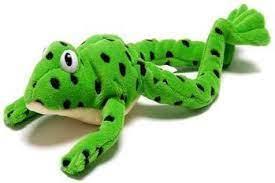
In EYFS all children will learn how to ‘read’ and ‘write’ all of the sounds in Set 1 and Set 2 then taught how to blend these into words. Fred the frog helps the children to blend the sounds together which is then used to help children read. The teachers will often use the phrase ‘Fred talk’ to sound out words.
We assess all children on the scheme every six to eight weeks, to ensure that they are placed in the correct group for their reading ability. This also allows us to quickly identify any children who needs some support to access the learning at the level of the group. If this arises, we provide one-to-one tutoring for the child in accordance with the Read, Write Inc scheme to help individuals make rapid progress and once again be at the level of their group. Groups are taught by either a teacher or a TA who have had Read, Write Inc Phonics training. Sessions in EYFS are 20 minutes long, and then build up to 40 minutes in Key Stage One.
Children begin by learning Set 1 sounds in a specific order. They also begin learning to blend sounds together to make words after learning the first five sounds, through practising oral blending. When children can blend independently they progress on to reading green words.
Once children can read green words they begin to read stories in their Read, Write Inc sessions. Each storybook is matched to the sounds they can already read, which sets them up for success and helps to build their confidence with reading. It is through the storybooks we teach children red words, which are irregular words that are not phonetically plausible and cannot be sounded out (Fred talked). Every storybook is taught in the same way, children practice reading the green words in the story and also the red words before they begin to read the book. Children will then read the book several times to help build their fluency and comprehension skills.
Years One and Two
Children follow the same format as EYFS but will work on complex sounds (Set 2 and 3 sounds) and read books appropriate to their reading level. Daily sessions of RWI phonics last for 40 minutes.
Once your child knows all Set 1 sounds by sight and sound and uses them to blend to read words, we start teaching Set 2 initially and then Set 3 long vowel sounds. Your child will need to learn that most vowel sounds have more than one spelling. There are 12 Set 2 ‘speed sounds’ that are made up of two or three letter which represent just one sound. For example, ay as in play, ee as in tree and igh as in high. It is important that your child does not pronounce these as 2 or 3 separate sounds. When you child sees the ‘speed sound’ letters together in a word, they must say just one sound for these letters.
Set 1 sounds are taught in the following order, together with rhymes to help children form the letters correctly and instantly recognise sounds ready for blending.
|
Set 1 Sounds |
|
|
Sound |
Rhyme |
|
m |
Down Maisie then over the two mountains. Maisie, mountain, mountain. |
|
a |
Round the apple, down the leaf. |
|
s |
Slide around the snake |
|
d |
Round the dinosaur's back, up his neck and down to his feet. |
|
t |
Down the tower, across the tower, |
|
i |
Down the insects body, dot for the head. |
|
n |
Down Nobby and over the net. |
|
p |
Down the plait, up and over the pirates face. |
|
g |
Round the girls face, down her hair and give her a curl |
|
o |
All around the orange |
|
c |
Curl around the caterpillar |
|
k |
Down the kangaroos body, tail and leg |
|
u |
Down and under the umbrella, up to the top and down to the puddle |
|
b |
Down the laces, over the toe and touch the heel |
|
f |
Down the stem and draw the leaves |
|
e |
Slice into the egg, go over the top, then under the egg |
|
l |
Down the long leg |
|
h |
Down the horse's head to the hooves and over his back |
|
sh |
Slither down the snake, then down the horse's head to the hooves and over his back |
|
r |
Down the robot's back, then up and curl |
|
j |
Down his body, curl and dot |
|
v |
Down a wing, up a wing |
|
y |
Down a horn, up a horn and under the yak's head. |
|
w |
Down, up, down, up the worm. |
|
th |
Down the tower, across the tower, then down the horse’s head to the hooves and over his back |
|
z |
Zig-zag-zig, down the zip. |
|
ch |
Curl around the caterpillar, , then down the horse's head to the hooves and over his back |
|
qu |
Round the queen’s head, up to her crown, down her hair and curl |
|
x |
Cross down the arm and leg and cross the other way |
|
ng |
A thing on a string |
|
nk |
I think I stink |
Set 2 & 3 Sounds:
Set 2 Sounds - the long vowels. When children are very confident with both set 1 and 2 they are taught Set 3 Sounds.
|
Set 2 Sounds |
Set 3 Sounds |
||
|
Long vowel sound |
Set 2 Speed Sound cards Teach these first |
Set 3 Speed Sound cards |
|
|
ay |
ay: may I play |
a-e: make a cake |
ai: snail in the rain |
|
ee |
ee: what can you see |
ea: cup of tea |
e: he me we she be |
|
igh |
igh: fly high |
i-e: nice smile |
|
|
ow |
ow: blow the snow |
o-e: phone home |
ao: goat in a boat |
|
oo |
oo: poo at the zoo |
u-e: huge brute |
ew: chew the stew |
|
oo |
oo: look at a book |
|
|
|
ar |
ar: start the car |
|
|
|
or |
or: shut the door |
aw: yawn at dawn |
|
|
air |
air: that’s not fair |
are: share and care |
|
|
ir |
ir: whirl and twirl |
ur: nurse for a purse |
er: a better letter |
|
ou |
ou: shout it out |
ow: brown cow |
|
|
oy |
oy: toy for a boy |
oi: spoil the boy |
|
|
ire |
|
ire: fire fire! |
|
|
ear |
|
ear: hear with your ear |
|
|
ure |
|
ure: sure it’s pure? |
|
Please watch the video below to help how to say the sounds:
Blending (Fred Talk)
To expose your child to the idea of blending sounds together to make words, break down the words of the simple vocabulary you often use at home. For example, “please pass me that c – u – p”, “time for b – e - d”. This will help your child to practise their own oral blending as they can repeat the sounds back to you and then say the word. Help your child to say the pure sounds (‘m’ not ‘muh’, ‘s’ not ‘suh’ etc) as quickly as they can and then blend the sounds together to say the whole word.
Read Write Inc. Phonics: Ruth Miskin on how to teach blending to children
Ruth Miskin demonstrates how to teach children phonics through assisted word blending. You can find out more about Ruth's Read Write Inc. Phonics approach at...
Reading
When using Read, Write Inc to read the children will:
- learn 44 sounds and the corresponding letter/letter groups using simple prompts
- learn to read words using sound blending (Fred talk)
- read lively stories featuring words they have learnt to sounds out
- show that they comprehend the stories by answering ‘Find It’ and ‘Prove It’
Writing
When using Read, Write Inc to write the children will:
- learn to write the letter/letter groups which represent the 44 sounds
- learn to write words by saying the sounds and graphemes (Fred fingers)
Talking
When using Read, Write Inc the children will also work in pairs:
- to answer questions
- to take turns talking and listening to each other
- to give positive praise to each other
Reading with your child
Your child will bring home reading books to share with you. It is important you listen to them read each day. Help your child to decode words at home, it is really important to pronounce the sounds correctly (there are links useful videos within this document)
Vocabulary Building
Children need a rich vocabulary in order to develop high levels of comprehension. Help your child to build a wider vocabulary by using alternative words for things at home. Rather than saying you are pleased that they have tidied their toys away, you could use delighted, overjoyed, or thrilled. Again you can use massive, huge, enormous if you are describing something big.
Finally Do Not Worry
If your child is struggling at first with their sounds and words, do not worry they will get there in their own time. If you have time (and we all know time is precious!), try and read stories to your child before they go to bed. This will help develop a wider vocabulary which makes a vast difference to their quality of writing but it will also encourage them to enjoy a good story.
Please find at table below which highlights some of the keys phrases school uses when teaching RWI.
|
Term |
Definition |
|
Fred |
Fred is a frog puppet we use in sessions. He can only speak in sounds. |
|
Fred talk |
Sounding out a word, saying each of the sounds before blending |
|
Fred fingers |
‘Pinching’ each sound from a word on your fingers to help spell a word |
|
Green words |
Decodable words |
|
Red words |
Irregular words that cannot be sounded out |
|
Story Green words |
Decodable words that will be included in the storybook |
|
Speedy green words |
Decodable words in the storybook that children should be able to read at speed rather than Fred talking first. |
|
Fred in your Head |
Still sounding out a word but doing so in your head rather than out loud, helps build fluency. |
|
Special friends |
Two or three letters working together to make one sound e.g. sh, ch, igh, air, a-e, i-e. |
RWI New Curriculum Grid
Useful Resources
Oxford Owl - https://home.oxfordowl.co.uk/
Ruth Miskin website - https://home.oxfordowl.co.uk/reading/reading-schemes-oxford-levels/read-write-inc-phonics-guide/